Showing posts with label Trip. Show all posts

Students Explore Industry Innovations at ARCHIDEX 2026

On 29 July 2026, staff and students from the Bachelor of Arts (Honours) in Interior Architecture and Design and Diploma in Interior Design programmes of First City University College (FCUC) recently embarked on an educational visit to ARCHIDEX 2026, held at the Malaysia International Trade and Exhibition Centre (MITEC), Kuala Lumpur.

ARCHIDEX is one of Asia's leading architecture, interior design, and building industry exhibitions, bringing together architects, interior designers, manufacturers, suppliers, and industry professionals from around the world. The visit provided FCUC students with a valuable opportunity to experience the latest trends, technologies, materials, and innovations shaping the future of the built environment.


During the exhibition, students explored a wide range of product showcases, including sustainable building materials, smart home technologies, innovative furniture designs, lighting systems, surface finishes, and environmentally responsible design solutions. The exposure allowed students to gain first-hand insights into current industry practices and emerging developments that are influencing contemporary interior architecture and design.


The educational visit also enabled students to interact with exhibitors, industry experts, and design professionals. Through these engagements, students learned about real-world project applications, professional expectations, and career pathways within the design and construction sectors. Such interactions helped bridge the gap between classroom learning and industry practice, reinforcing the importance of practical knowledge and continuous innovation.


Faculty members accompanying the students highlighted the significance of industry exposure as part of FCUC's commitment to providing a holistic and industry-relevant educational experience. By observing current market trends and professional practices, students were able to better appreciate how design concepts taught in the classroom are translated into functional and aesthetically appealing spaces.

Educational Trip: Green Building Experience at PAM

 On 19 May 2026,  year 2 students from the BA (Hons) Interior Architecture and Design (BIAD) programme attended an educational trip to Pertubuhan Arkitek Malaysia (PAM), Bangsar, organised by Ar. IDr Elyn Tan Yee Ling.


The trip aimed to expose students to
green building design, sustainable planning, and environmentally responsible architectural practices. During the visit, students explored Green Building Index (GBI) features, sustainable systems, and energy-efficient design strategies implemented at the PAM Centre.

This visit helped students better understand how sustainability is applied in real projects and encouraged them to adopt eco-friendly design approaches in their future work.


Student reflections:

“The visitation gave me a better understanding of green building systems and sustainable design strategies used in real projects. It was a very meaningful learning experience.”
— Carlos Lee

“I learned how sustainable features and energy-efficient systems are applied in architecture design. The trip inspired me to consider greener solutions in future design projects.”
— Yuen Theng

Craft and Space: A Study Visit to Royal Selangor Visitor Centre

On 11 March 2026, the Interior Architecture and Design students, accompanied by four lecturers, participated in an enriching study excursion to the Royal Selangor Visitor Centre, gathering a total of 45 students for an afternoon dedicated to exploration, learning, and design appreciation.


The visit provided students with a unique opportunity to observe how heritage, craftsmanship, and design innovation intersect within one of Malaysia’s most renowned brands. A key highlight was the close-up look at the pewter-making process—an integral craft of Royal Selangor—where students witnessed each stage of production, from casting and forming to engraving and finishing.


This firsthand experience deepened their understanding of material behaviour, detailing techniques, production workflows, and the relationship between tools, artisanship, and final design outcomes. Such exposure is especially relevant for interior and spatial design students, who must consider materiality and fabrication methods in their studio work.

In addition to craftsmanship, the Royal Selangor Visitor Centre offered an excellent real-world example of experience centre design. Students explored curated gallery spaces, immersive installations, and narrative-driven exhibits, all of which illustrate how spatial design can communicate brand heritage. Engaging with a professionally designed environment allowed students to draw both inspiration and practical insights to support their creative development.


Overall, the visit proved to be a meaningful and impactful learning experience. It enhanced students’ appreciation of material craft, strengthened their understanding of experiential interior design, and expanded their perspective on how thoughtful spatial design can shape memorable visitor journeys.

Learning Sustainability Through Residential Design

Year 2 Students Explore Sustainable Residential Design in Subang Jaya

On 28 January 2026, a group of Year 2 students from the BA (Hons) Interior Architecture & Design programme, accompanied by lecturer CK Foo, participated in an educational site visit focused on green and sustainable residential building design.

The study trip featured visits to two award-winning residential projects in Subang Jaya, designed by AATA (Atelier Alan Teh Architect). Personally guided by the architects themselves and generously supported by the homeowners, the visit offered students invaluable first-hand exposure to real-life sustainable living environments. During the site visits, students took part in guided walkthroughs led by the AATA architects, who explained the sustainable strategies integrated into each project. These included material selection, passive design principles, spatial planning, and environmental responsiveness.


Students also conducted on-site observation and documentation, recording design strategies and taking physical measurements of structural and building services components related to sustainable performance. This hands-on approach allowed them to directly connect theoretical knowledge with built realities. The visit included in-depth discussion sessions with the AATA designers and direct interaction with homeowners. These conversations provided insight into design workflows, sustainability-driven decision-making, and the real-world constraints faced in professional architectural practice.

The study trip strongly supported the learning outcomes of the Building Technology & Services module, helping students understand how sustainable principles are translated from concept to construction. It also highlighted the close relationship between architecture, interior design, lifestyle, and environmental responsibility.

Student Reflections

  • OOI Qi Earn highlighted the value of direct communication with both the architect and the homeowner, gaining a clearer understanding of the full design process from initial concept to project handover.

  • NG Chuan Yuan appreciated the architects’ guidance, noting that the visit broadened his understanding of green building strategies, particularly contextual design and the concept of subtraction in architecture.

  • NG Wei Shan expressed gratitude to the architects, homeowners, and lecturer, describing the houses as inspiring and the experience as both educational and memorable.

  • KUAN Ern Qi found the on-site experience especially meaningful, explaining that being physically present allowed for a deeper understanding of materials, spatial quality, and the lived experience of sustainable design beyond classroom learning. 

This educational site visit provided students with a rich and immersive learning experience in sustainable residential design. The professional guidance from AATA architects, together with the generosity and hospitality of the homeowners, greatly enriched students’ understanding of sustainability from both architectural and interior design perspectives.

Such experiential learning opportunities play a vital role in shaping future designers who are environmentally conscious, socially responsible, and professionally prepared.


Discovering History Through Spatial Design: A Study Visit to Petaling Street

On 16 January 2026, a total of 51 students from the Bachelor of Interior Architecture and Design (BIAD) and Diploma in Interior Design (DID) programmes took part in an educational field trip titled “Discovering History Through Spatial Design.” 
The visit to the Yan Keng Benevolent Dramatic Association and Beryl’s Chocolate at Petaling Street aimed to expose students to spatial storytelling, cultural heritage, and the historical layers that shape one of Kuala Lumpur’s oldest and most culturally diverse districts.


Group photo at Yan Keng Benevolent Dramatic Association

At Beryl's Chocolate Shop

Through on-site observations, students explored how adaptive reuse strategies are applied within heritage buildings and examined the influence of commercial architecture in historic contexts. This hands-on learning experience encouraged students to critically analyse spaces from historical, contextual, and human-centred perspectives, offering valuable insights to inform and enrich their future design practices.

A highlight of the visit was the opportunity for students to meet the owner of the Yan Keng Benevolent Dramatic Association, who shared firsthand accounts of the building’s history and its cultural significance. This direct engagement provided students with deeper understanding of how intangible heritage, beliefs, and traditions are preserved and expressed through spatial design.

Reflecting on the experience, one student shared:

“The visit to the Yan Keng Building and Beryl’s Chocolate allowed me to see how cultural beliefs are translated into spatial design, deepening my appreciation of how architectural spaces convey stories through their materials, layout, and symbolism.”
— Carlos Lee Ming Jun, Design Studio 3 Student, BIAD


Site Investigation


Compiling and checking on measurements

 Taking Site Measurement

Overall, the study visit served as a meaningful platform for experiential learning, bridging academic knowledge with real-world heritage environments and reinforcing the importance of context-sensitive design in interior architecture.


Study Trip to Paragon Carpet and De'Nation

CONNECTING DESIGN THEORY WITH REAL-WORLD PRACTICE: INTERIOR DESIGN STUDENTS EXPLORE INTERIOR PRODUCTS AND FINISHING MATERIALS

On 21 October 2025, Diploma in Interior Design students went on a field trip to Paragon Carpet Distributor in Balakong and De’Nation Interior Design Showroom in Jalan Klang Lama, where they explored the latest material innovations and gained insight into real-world production processes.
At Paragon Carpet, students gained firsthand exposure to the intricate stages of carpet manufacturing, from yarn preparation and tufting to backing and finishing. They also learned how sustainable practices, quality control, and digital design technologies are integrated into modern production processes.


Next is the visit to De’Nation further expanded students’ perspectives on interior material applications. Through exposure to a wide range of finishes, furnishings, and modern design solutions, students explored diverse interior elements such as wallpaper, curtain systems, and SPC flooring.


Diploma in Interior Design Semester 2 student Lau Yu Kee shared, “The trips to both Paragon Carpet and De’Nation were very insightful as they provided a comprehensive understanding of the production process, from the initial stages to the final outcomes.”
Similarly, Semester 3 student Chloe Lee reflected, “The field trips were very fruitful and provided valuable exposure to various materials and finishes. The visit to the carpet factory allowed us to observe firsthand how cut pile carpets are produced using specialized machinery, deepening our understanding of manufacturing processes. The interactive Q&A session at the end made the learning experience more engaging, and it was encouraging that three of us won prizes.”


Through these field trips, students learned to apply classroom knowledge to real industry practices, understand the importance of sustainable and innovative design, and see how material choices shape the look, feel, and function of a space. Students also strengthened their critical thinking and professional skills, preparing them to succeed as emerging design professionals.

Immersive Learning @ Worq Bandar Utama


Welcoming speech and introduction to Worq Bandar Utama by Mr Kenny.

On 6 August 2025, Diploma in Interior Design students embarked on an insightful study visit to Worq Bandar Utama, led by Ts. Wayne Ng, the programme coordinator. The visit offered a valuable opportunity for students to connect classroom theory with real-world design practice in a dynamic coworking environment. The session began with a warm welcome from host representative Mr. Ariff, setting the stage for an engaging and educational experience. Students were then divided into three groups for a guided tour of the coworking space. They explored firsthand how effective workplace planning, spatial organization, and interior design principles are applied to create functional and community-oriented environments. This immersive exposure allowed students to observe the interplay between aesthetics and utility in professional settings. 

Entourage Photo With Worq Bandar Utama Staff and Designer


Following the tour, students participated in a lively Q&A session led by Designer Mr. Kenny. Encouraged to ask questions and share insights, the students deepened their understanding of design challenges and solutions relevant to coworking spaces. A reflective discussion with lecturers then helped students link their observations to academic concepts and sharpen their design thinking. The visit concluded with a group photo and a token of appreciation presented by the class representative to the hosts, marking the day’s success and collaborative spirit. Students found the experience both inspiring and practically useful. 

Chiew Tong Ern reflected, “Exploring how coworking spaces are designed to balance functionality and community was incredibly inspiring. It helped me see how spatial planning can encourage collaboration.” 

Jesmine Ting Yu Han added, “The visit gave me new insight into how coworking environments can be tailored to different user needs. It was a great reference for our own design project.” 

Overall, the study visit enriched the Diploma in Interior Design students’ learning journey by offering tangible examples of professional design practice. It strengthened their ability to apply design principles creatively and thoughtfully, helping to prepare them for future challenges in the interior design industry.

A Study Tour to The Makeover Guys

The visit to The Makeover Guys office was more than just a tour,it was an immersive learning experience that allowed students to see how interior design can shape not just spaces, but also the way people work, collaborate, and connect with a company’s values. The session began with an engaging introduction by Vinise from the People & Culture team. She gave students a clear picture of the company’s background and what to expect from the visit, helping them view the office not just as a physical space, but as a reflection of The Makeover Guys’ core identity. Her insights also set the tone for the importance of people-focused design, an essential element often overlooked in academic projects.
Following that, Mr. Gavin, the Founder and CEO, delivered a powerful presentation on the company’s vision, its mission to transform living spaces, and how the principles of design are embedded into the DNA of their workplace. He explained how a well-designed office doesn’t only look good, it enhances team performance, communicates brand values, and supports company culture. His talk offered students a real-world understanding of how business goals and design decisions go hand-in-hand. The office tour was a true highlight. Students were guided through various zones of the workspace, each designed with intention and creativity. From open collaboration areas to cozy breakout corners, every space served a purpose. Students observed how the layout encourages productivity, supports teamwork, and reflects the company’s youthful, energetic brand. The creative use of colors, materials, lighting, and even graphics served as design cues that students could relate back to their own projects.
Key features such as flexible workstations, brand storytelling elements, and efficient space utilization showed how design can be both functional and emotionally engaging. These real-life applications of design strategies gave students tangible examples to refer to for their academic assignments helping them bridge the gap between theory and practice. To wrap up the visit, students participated in a lively Q&A session with industry professionals.
This dialogue allowed them to ask meaningful questions about the design process, materials, user needs, and even challenges faced during project execution. It was a rare and valuable opportunity to gain practical insights from people working at the heart of the interior design industry. In the end, the visit left students inspired not only with creative ideas for their studio work, but also with a clearer sense of how thoughtful workplace design can elevate a company’s brand and culture. It served as a strong reminder that successful interior design goes far beyond aesthetics, it’s about designing for people, purpose, and performance.

Exploring Heritage and Design: BIAD Students' Inspiring Study Trip to George Town, Penang

From February 18th to 20th, BIAD students took an exciting trip to George Town, Penang, to dive into its rich cultural and architectural heritage. The visit included exploring iconic landmarks, local businesses, and vibrant cultural hubs, offering students a hands-on learning experience. It was an opportunity to gain fresh insights into design, history, and community spaces, sparking creativity and deepening their understanding of how culture and architecture intersect.
Sem 1 and Sem 7 BIAD students attended a ceramic workshop in Penang, where they learned handbuilding and wheel throwing techniques to create sculptures and functional items like bowls and mugs. They explored glazing and surface decoration, experimenting with colors and textures. The workshop also highlighted the cultural and historical significance of ceramics, while encouraging creativity and self-expression. By the end, students crafted their own pieces and gained valuable lessons beyond the studio.
Sem 3 BIAD students recently visited China House and Black Kettle on Beach Street in Georgetown. During the visit, they explored the unique architecture, art, and cultural offerings of China House, a popular spot known for blending modern and traditional elements. They also enjoyed the vibrant atmosphere at Black Kettle, a cozy café offering a mix of local and international flavors. The visit allowed students to immerse themselves in Georgetown's rich heritage while gaining inspiration for their studies.Sem 4 BIAD students visited several places for their case studies, including Heritage House 25, P66 Pen Store, Loteng Bookstore, and Esplanade in Penang. During their visit to Heritage House 25, students can learn about traditional craftsmanship, cultural preservation, and the integration of heritage into modern spaces. They’ll gain an understanding of how local artistry, such as batik, wood carvings, and pottery, reflects the region's history and identity. Meanwhile, at P66 Pen Store, students will explore the intersection of design and functionality in high-quality stationery. They can learn about product design, branding, and the importance of craftsmanship in creating objects that are both practical and aesthetically appealing. After that, they also visited the Loteng Bookstore, which offers insights into interior design and the role of bookstores as cultural and community hubs. Finally, Sem 4 BIAD students visited the Esplanade, which provides valuable knowledge about public space design and the role of architecture in community building. They can explore how well-designed public spaces foster social interaction, enhance the urban environment, and reflect cultural values.
The site analysis visit to TPCS, the Postcard Shop, and Soon Huat Vintage Hall in Penang offers Sem 6 BIAD students valuable insights into retail design, branding, and customer experience. Students can observe how layout, colors, and lighting create an inviting atmosphere and enhance the shopping experience. They also explore how the store’s branding and product displays reflect Penang’s local culture, providing an understanding of cultural integration in retail environments. The visit offers an opportunity to learn about sustainable practices and locally sourced products if TPCS emphasizes these aspects. Overall, the visit enhances students' understanding of how design, culture, and business practices intersect in a real-world retail setting.
Visiting the General Post Office and Bank Negara Malaysia in Penang offers BIAD Semester 2 students valuable historical knowledge by exposing them to colonial and modern architectural styles. Meanwhile, Bank Negara Malaysia provides insights into the country's economic history, showcasing the evolution of national identity through its architecture. These visits help students understand the role of architecture in shaping cultural and historical narratives, enriching their appreciation of heritage in design. The trip to George Town, Penang, was a truly inspiring experience for all BIAD students, blending history, culture, and design in one unforgettable journey. It provided valuable insights that will surely influence their studies and future projects. As they return, students are excited to apply what they've learned and continue exploring the world of architecture and design.

Niro Granite Showroom Visit

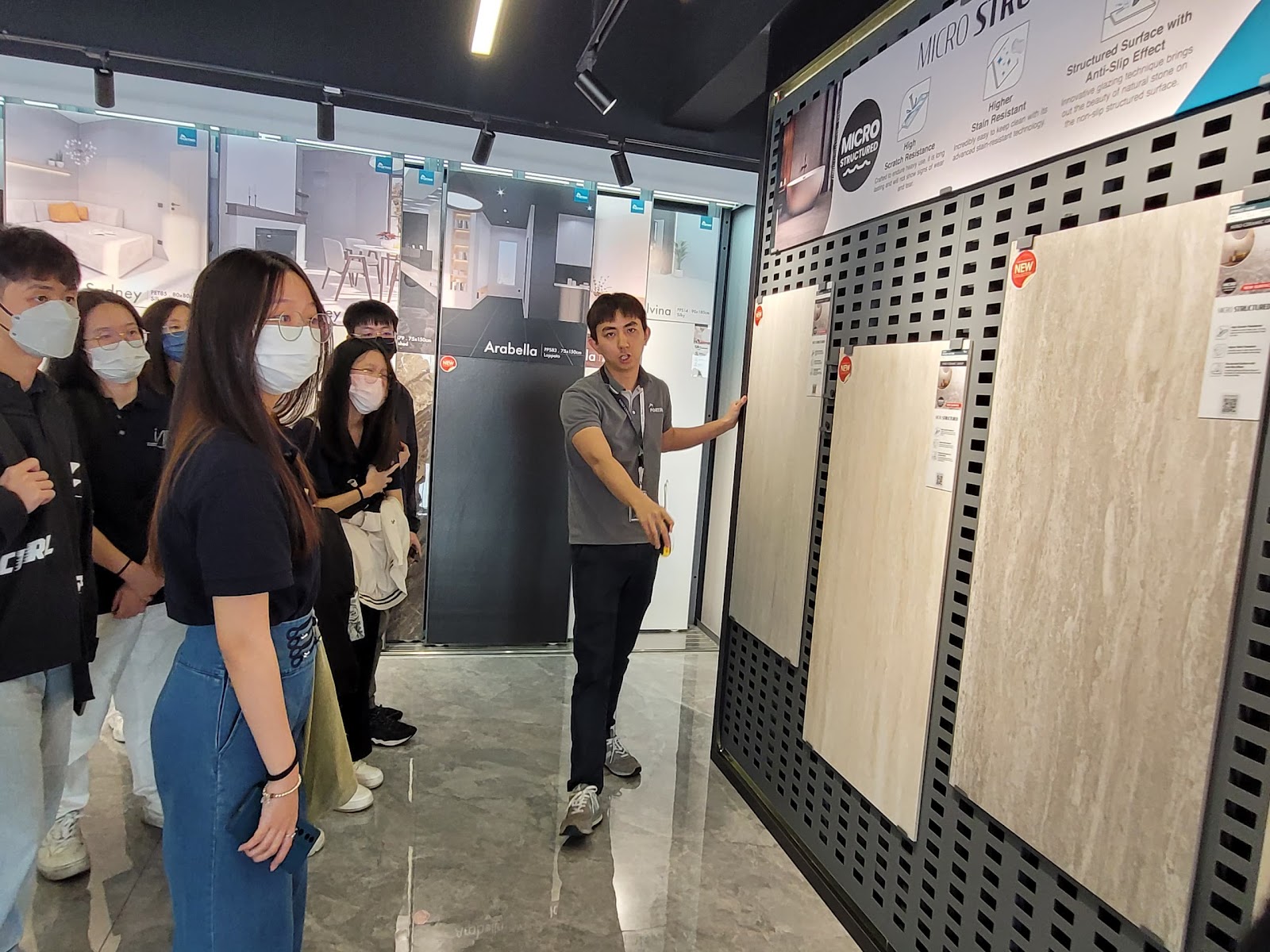
On 20 November 2024, 45 students from the Diploma in Interior Design(DID) program visited the Niro granite showroom in Shah Alam. This study trip was very beneficial for the students who took part as they got to learn in advance about the latest tiles-making technology, tiles properties, and how to install tiles correctly to avoid tile failure.
Our trip begins with a welcoming speech by Ms Cheryl from the Niro Granite team. Niro Granite also arranges two valuable Talks for us regarding the brand and history of Niro Granite. Students get to know common Niro granite products and their strengths so that they can propose to their clients in the future when they work. The 2nd talk was shared by Mr Darren and he explained in detail about different types of tiles sold in Niro, the applications of each tile, and also the right way to install tiles to avoid tiling failures.
 Nevertheless, one of the Niro granite staff also took us around for a tour of the Niro Granite showroom, so that students could see and touch the real tile samples which have many different finishes. In the showroom, we also can see how Niro applies tiles in the bedroom, kitchen, and reception area.
Students also can witness Niro Granite's creative hub and explore the visualization software that Niro Granite uses to deal with their daily customers. Furthermore, Niro granite staff also arrange a demonstration of slit stop tiles and explain the strength of the tiles and how it is better compared to the tiles sold by another supplier.
Crystal Kim Zuan Yu This study trip taught me valuable knowledge about tiles application & how to install tiles properly giving me the confidence to communicate with contractors during managing a site project in the future. Toh Yee Her This study trip taught me about different types of tile finishes and also we can touch and feel the tile finishes helped me to improve my color and material selection according to different design styles.
The trip ended with a group photograph and a token of appreciation was presented to Ms Cheryl for arranging a wonderful tour around the showroom. The trip offers students valuable knowledge to future designers so that they know how to apply the right materials for their projects.